WordPress SEO Isn't a Plugin Setting — It's a Publishing Habit
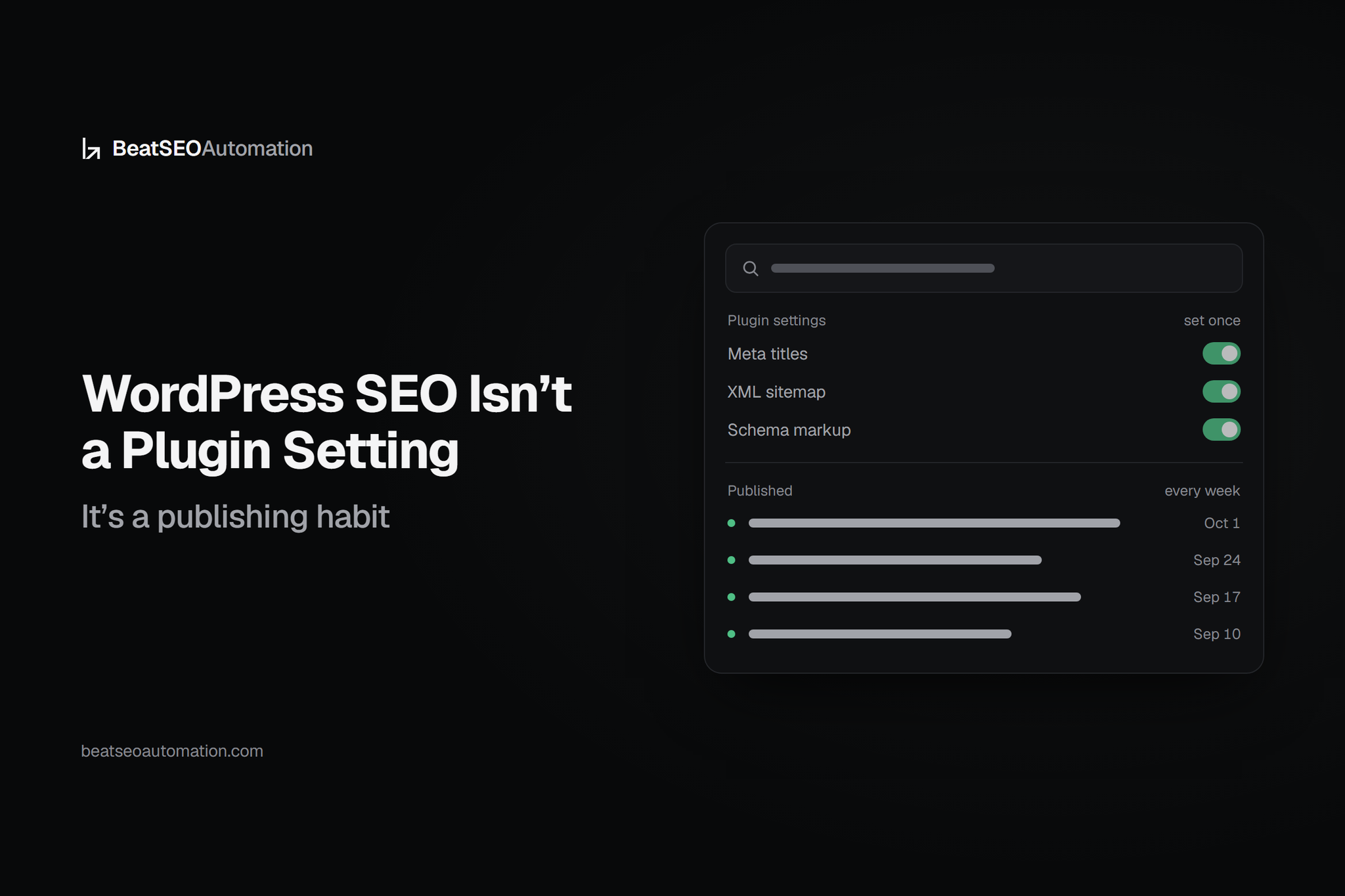
WordPress SEO means two things working together: technical on-page optimization (handled by a plugin like Yoast or Rank Math) and a steady stream of new, keyword-targeted content. Most sites only do the first — which is exactly why rankings plateau even after the plugin shows a green light.
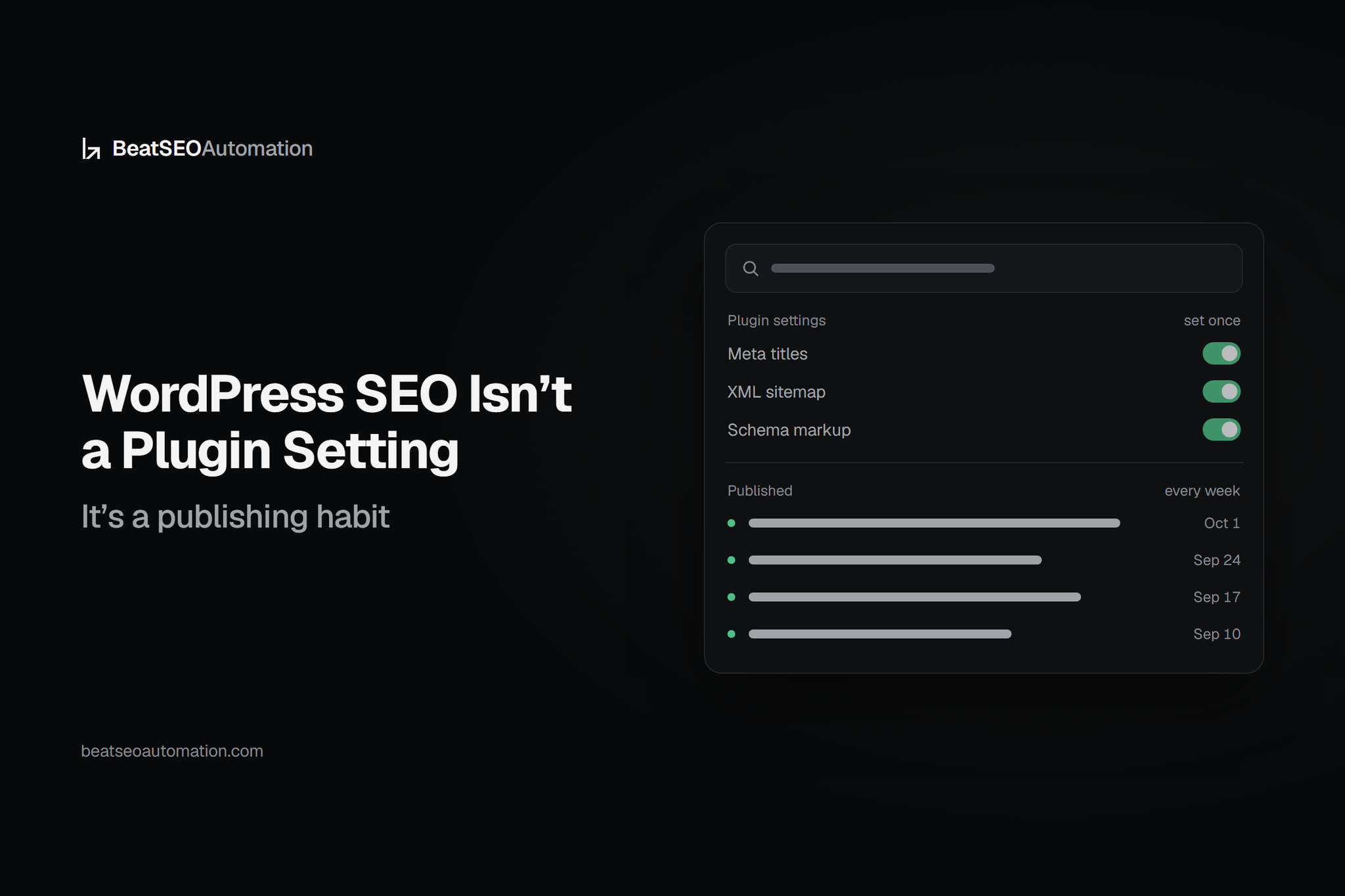
You installed Yoast or Rank Math. You filled in the meta fields, set your focus keyword, maybe even hit that satisfying green light. So why did rankings stall three weeks later?
Because a plugin optimizes what's already on the page — it doesn't put anything new there. A configured plugin checks title tags, readability, and keyword placement on existing posts; it has no mechanism for generating the fresh pages Google needs to see you as active in a topic. Google's own Search Central guidance lists content freshness as one of several relevance signals it weighs, especially for queries tied to current information — which means a well-tuned plugin sitting on a dormant blog is just a well-organized empty room.
The fix isn't a better setting. It's a feed. We research the keywords, draft the post, and publish optimized content straight to your WordPress site on a schedule — so the plugin has something worth optimizing, every single week.
If your site's been running on plugin settings alone, it's time to add the habit back in.
We publish optimized posts straight to your WordPress — get a quote.
Frequently asked questions
What is WordPress SEO?
WordPress SEO is the combination of technical on-page optimization (titles, meta descriptions, keyword usage — typically managed through a plugin) and an ongoing content strategy that gives search engines new, relevant pages to index and rank.
Does installing Yoast or Rank Math automatically improve my rankings?
No. These plugins optimize the structure of pages you already have, but they don't create new content, so a site that stops publishing will plateau regardless of how well the plugin is configured.
How often should I publish new content on WordPress for SEO to work?
There's no universal number, but consistency matters more than volume — a steady weekly or biweekly cadence of keyword-targeted posts signals ongoing relevance far more effectively than sporadic bursts of content.
Can I do WordPress SEO without a content strategy?
You can optimize existing pages without one, but rankings typically stall because you're only addressing half the equation — technical setup without a feed of new content rarely sustains growth.
What's the difference between technical SEO and content SEO on WordPress?
Technical SEO covers site-level factors like page speed, meta tags, and structured data, usually handled by a plugin; content SEO is the ongoing research and publishing of keyword-targeted posts that give the technical setup something to rank.