Define Key Performance Indicator: The SEO KPIs That Actually Predict Revenue
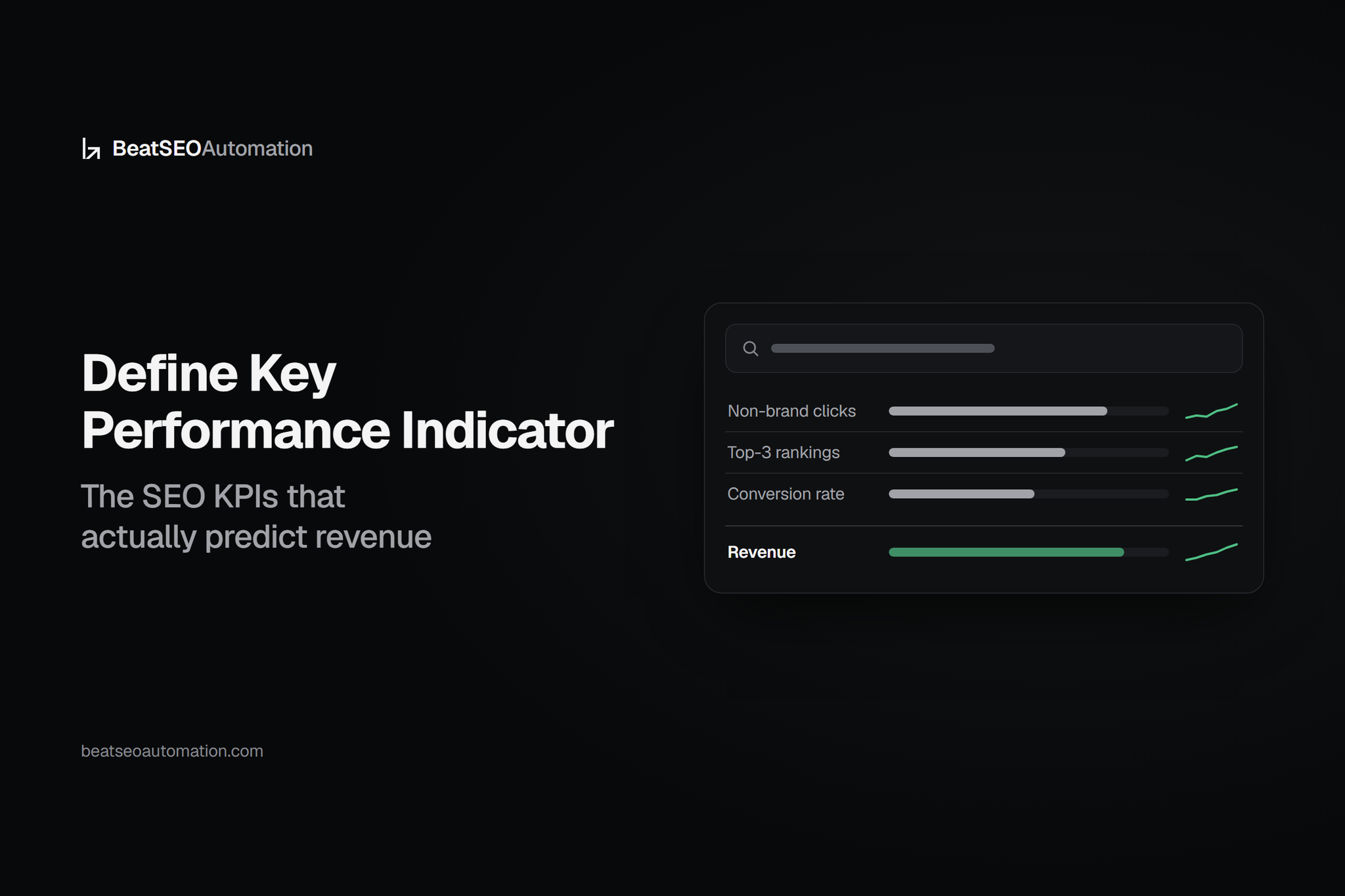
A key performance indicator (KPI) is a measurable value tracked against a specific target and timeframe to show whether a business objective is being achieved. To define key performance indicator the way an SEO or marketing team actually needs — not the way a glossary does — a KPI is a metric with three things attached to it: a target, a deadline, and a connection to revenue. Generic definitions from sites like Investopedia stop at "measurable value." They never say which SEO numbers forecast leads and which just look good in a dashboard.
KPI vs. Metric vs. Vanity Number: How to Define Key Performance Indicator Data That Matters
Every KPI is a metric, but not every metric is a KPI. A metric is a raw number — page views, impressions, word count published. A KPI is a metric with a target attached to a business goal: "organic quote requests, up 20% this quarter." A vanity number is a metric that trends up without moving revenue — total blog posts published, social followers, or raw impressions with no click-through. Siteimprove's own help documentation acknowledges this distinction exists but buries it several clicks deep; most site owners never see it before they've already built a report around the wrong number.
The 7 SEO KPIs That Actually Predict Revenue
These are the numbers worth putting on a monthly scorecard:
- Keyword rankings for commercial-intent terms, tracked as a trend, not a snapshot — see our breakdown of reading SEO ranking checker tools.
- Indexed content velocity — how many new pages Google actually indexes per month, not just publishes.
- Organic leads or quote requests attributed to organic traffic, pulled from Google Search Analytics reports.
- AI citation share — how often your content gets pulled into AI Overviews, ChatGPT, or Perplexity answers for your target queries.
- Backlinks earned, weighted by relevance, not raw count.
- Publishing cadence — consistency matters more to compounding rankings than any single post.
- Cost per approved post — what each piece of published content actually costs once research, drafting, and review are counted.
Setting a Baseline and Target Without a Full Analytics Team
You don't need a data analyst to do this. Pull your last 90 days of Search Console data, pick three KPIs from the list above, and set one realistic target for each — for example, "move indexed pages from 40 to 60 in 60 days." According to Google, roughly 15% of searches typed every day have never been searched before, which is exactly why rankings need to be tracked as a trend across weeks, not judged from a single day's snapshot. And according to BrightEdge research, organic search drives over half of measurable website traffic for the average business — which is why this KPI list starts with rankings and indexed pages, not page views or social shares.
How Our Monthly SEO Reports Surface These KPIs in Plain English
This is exactly what our monthly SEO reports are built to do: track keyword rankings, indexed content velocity, backlinks earned, and publishing cadence, then explain what moved and why — in language a non-marketer can read, not a spreadsheet you have to decode. See the exact KPIs our monthly SEO reports track for you — request a sample report and quote.
Frequently asked questions
What is the definition of a key performance indicator (KPI)?
A KPI is a measurable value tracked against a specific target and timeframe to show whether a business objective is being achieved — in practice, it's a metric with a target, a deadline, and a tie to a business outcome like revenue.
What makes a good KPI?
A good KPI has a specific target, a timeframe, and a clear tie to a business outcome — for example, organic quote requests up 20% in a quarter — rather than just a number trending in a direction.
How many KPIs should a business track?
Most small businesses do best tracking 3 to 5 KPIs at a time; tracking more than that tends to dilute focus and makes monthly reporting harder to act on.
What is a leading vs. lagging indicator?
A leading indicator predicts future results, like publishing cadence or indexed content velocity, while a lagging indicator reports what already happened, like total organic leads closed last month.
Is a KPI the same thing as a metric?
No — every KPI is a metric, but a metric only becomes a KPI once it's tied to a specific target and a business goal, such as revenue or lead volume. A vanity metric, like total blog posts published, moves without ever reflecting business impact.