Ran Your Site Through a Free Website SEO Checker? Here's the Trap in the Score
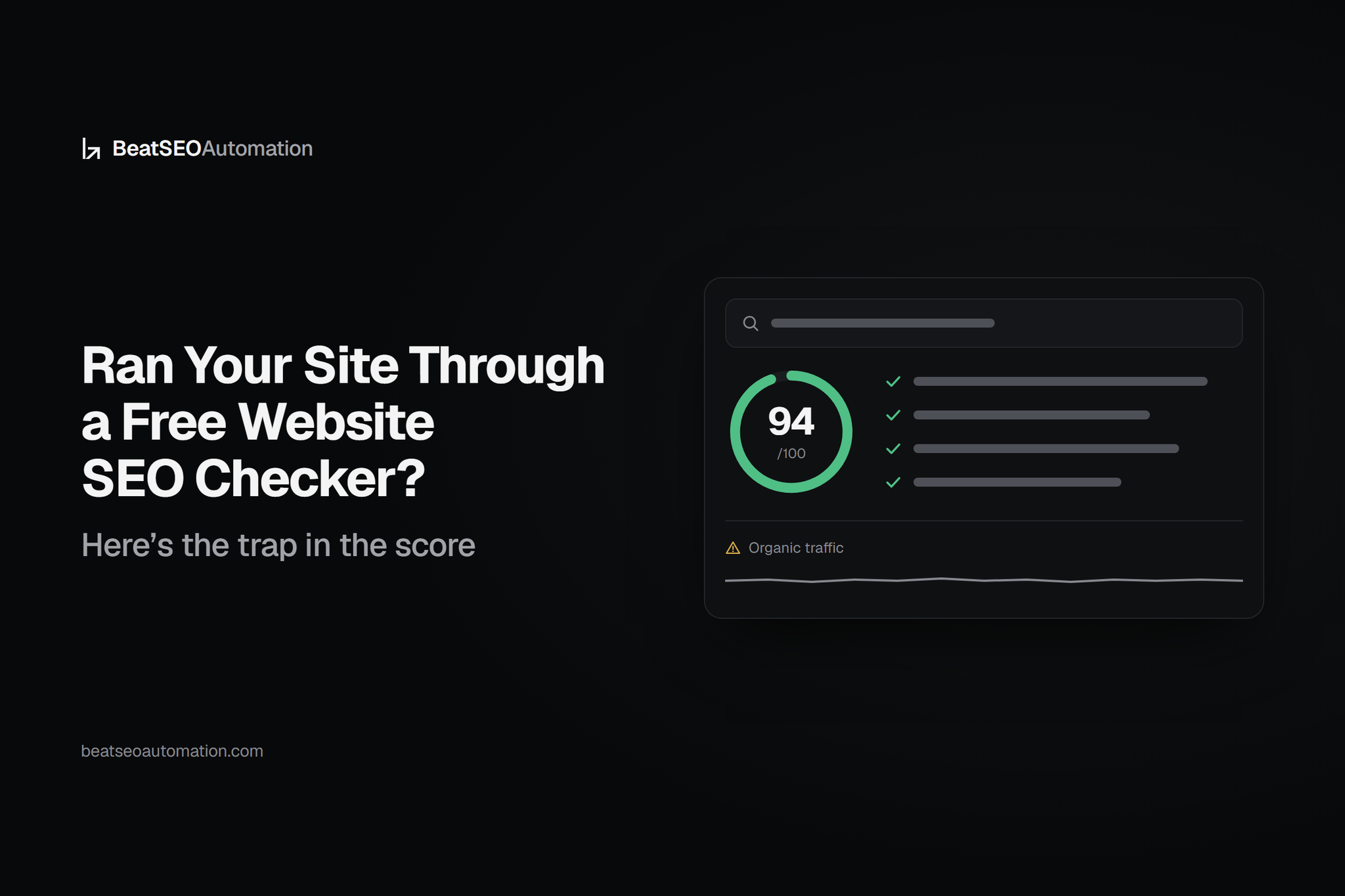
A website SEO checker scans your site and hands you a single number — often somewhere between 40 and 80 — plus a long list of flagged "issues." The trap: that list is almost always sorted by how easy an issue is to detect automatically, not by how much fixing it will actually move your rankings. Treat the score as a starting point, not a to-do list in priority order.

Your 68/100 means less than you think
You ran a free website SEO checker, got a score, and now you're staring at a list of 40 flagged "issues." Here's what most checkers won't tell you: that list is sorted by how easy it is to detect, not by how much it will move your rankings. A missing image alt tag takes a crawler milliseconds to catch. A content gap where a competitor thoroughly answers a question your page ignores takes real analysis — so most automated checkers skip that check entirely, even though it's often the bigger ranking factor.
What actually matters:
- Thin or duplicate title tags on pages that get traffic — for example, ten product pages all sharing a near-identical title, splitting relevance instead of each one owning a distinct search term
- Missing internal links from your best-ranking pages to the pages you actually want to rank
- Content gaps where competitors answer a question your page doesn't address at all
What's mostly noise:
- Minor image alt-text warnings on pages nobody visits
- "Too many" H2 tags
- Cosmetic meta description length flags
Here's the fix almost no checker suggests, because it's not a checkbox: publish more relevant, well-researched content on the topics your buyers are actually searching. A perfect score with six blog posts loses to an 80/100 with sixty answer-shaped pages, every time — because rankings reward topical coverage and relevance, not a clean audit report.
If you've already run the audit and want the honest version of what to fix first, our free website SEO checker audit guide breaks down exactly that. And if you're comparing tools before you commit to any of them, see our honest map of free vs. paid SEO tools.
We read the score, prioritize what actually moves rankings, and ship the content fixes — researched, drafted, and ready for your approval every day. Get the fixes that matter handled for you — request a quote.
Frequently asked questions
What does a website SEO checker score actually measure?
It measures how many detectable technical and on-page issues a crawler found — things like title length, alt text, or meta description length — not how much any single issue is holding back your rankings.
Should I fix every issue a free SEO checker flags, in order?
No. Fix issues by ranking impact, not by list order: prioritize thin or duplicate titles and missing internal links on pages that already get traffic before touching cosmetic flags like H2 count or alt-text on unvisited pages.
Why does a page score low but still outrank a page that scores high?
SEO checkers can't measure topical depth or content relevance to what buyers are searching, and those factors often matter more to rankings than a clean technical scorecard.
What's the one fix most website SEO checkers never mention?
Publishing more relevant, well-researched content on the topics your buyers actually search for — checkers can flag missing meta tags, but they can't tell you what content you should be creating.
Are free and paid website SEO checkers different in what they catch?
They mostly catch the same easy-to-detect technical issues; the differences show up in reporting depth and tracking over time, not in whether they can identify content gaps or prioritize by ranking impact.