Topical Authority: How a Daily Content Engine Builds It Faster Than One-Off Posts
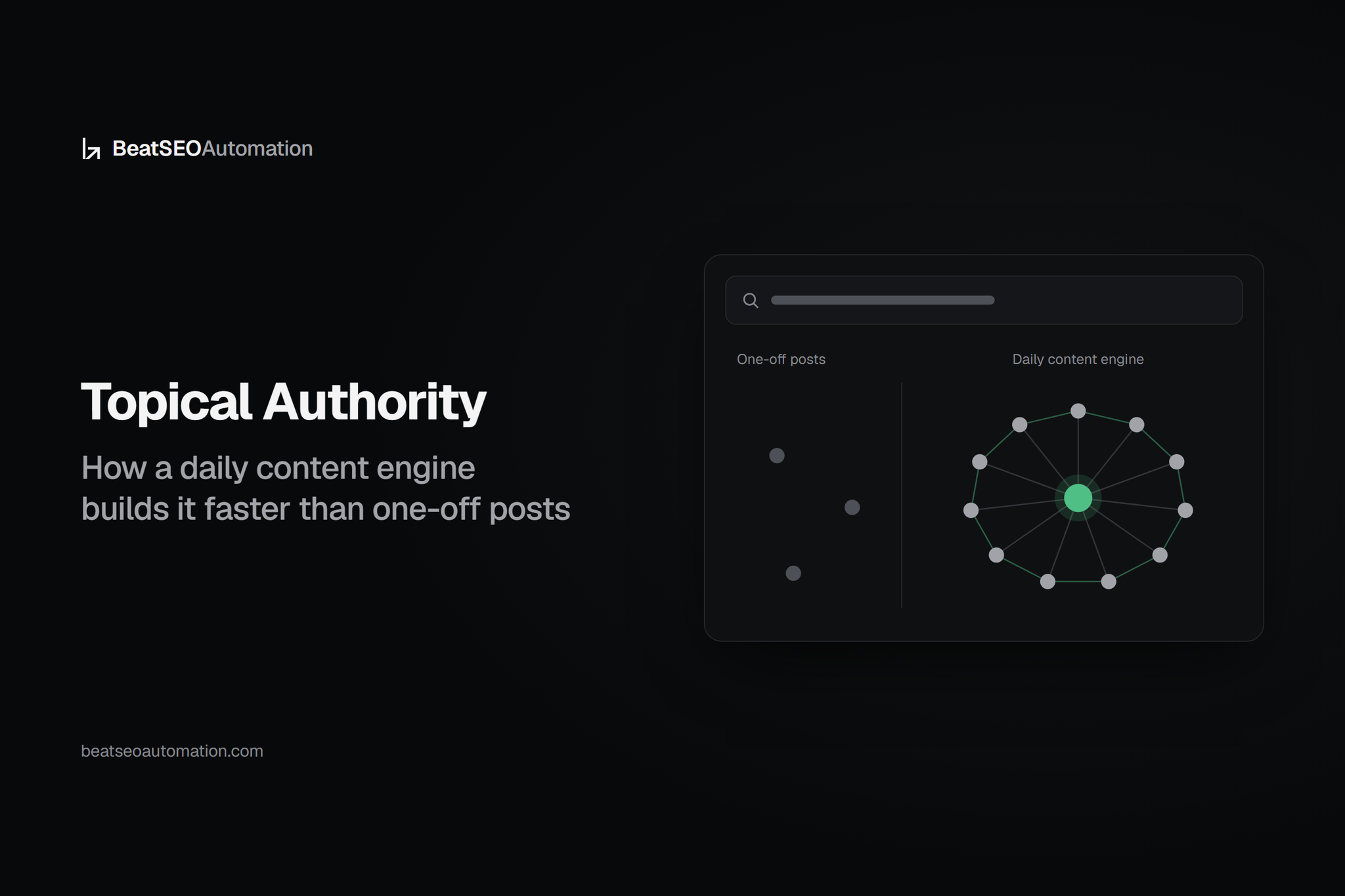
Topical authority is the degree to which search engines trust a website as a comprehensive, reliable source on a given subject. It's earned through publishing cadence and breadth of coverage — not through a single optimized post. One hero article, however well-researched, tells Google you wrote about a topic once. Thirty connected articles tell Google you own it.
That distinction matters more than most SEO advice admits. According to Google's own Search Quality Rater Guidelines, raters are instructed to evaluate a site's overall expertise and trustworthiness on a subject — not just the quality of the single page a user lands on. A site demonstrates that expertise through the depth and consistency of its content over time, which is exactly what a one-off blog post can't provide on its own.
What Topical Authority Actually Means (and Why Depth Beats a Single Hero Post)
Search engines increasingly reward sites that cover a subject from every realistic angle a searcher might take. A single 2,000-word guide on "SEO automation" might rank for its exact title, but it can't answer the dozen adjacent questions real searchers ask — pricing, tool comparisons, implementation steps, industry-specific use cases. A cluster of articles can. That breadth signals to Google's ranking systems that your site is the place to send someone who's still exploring the topic, not just someone who already knows what they're looking for.
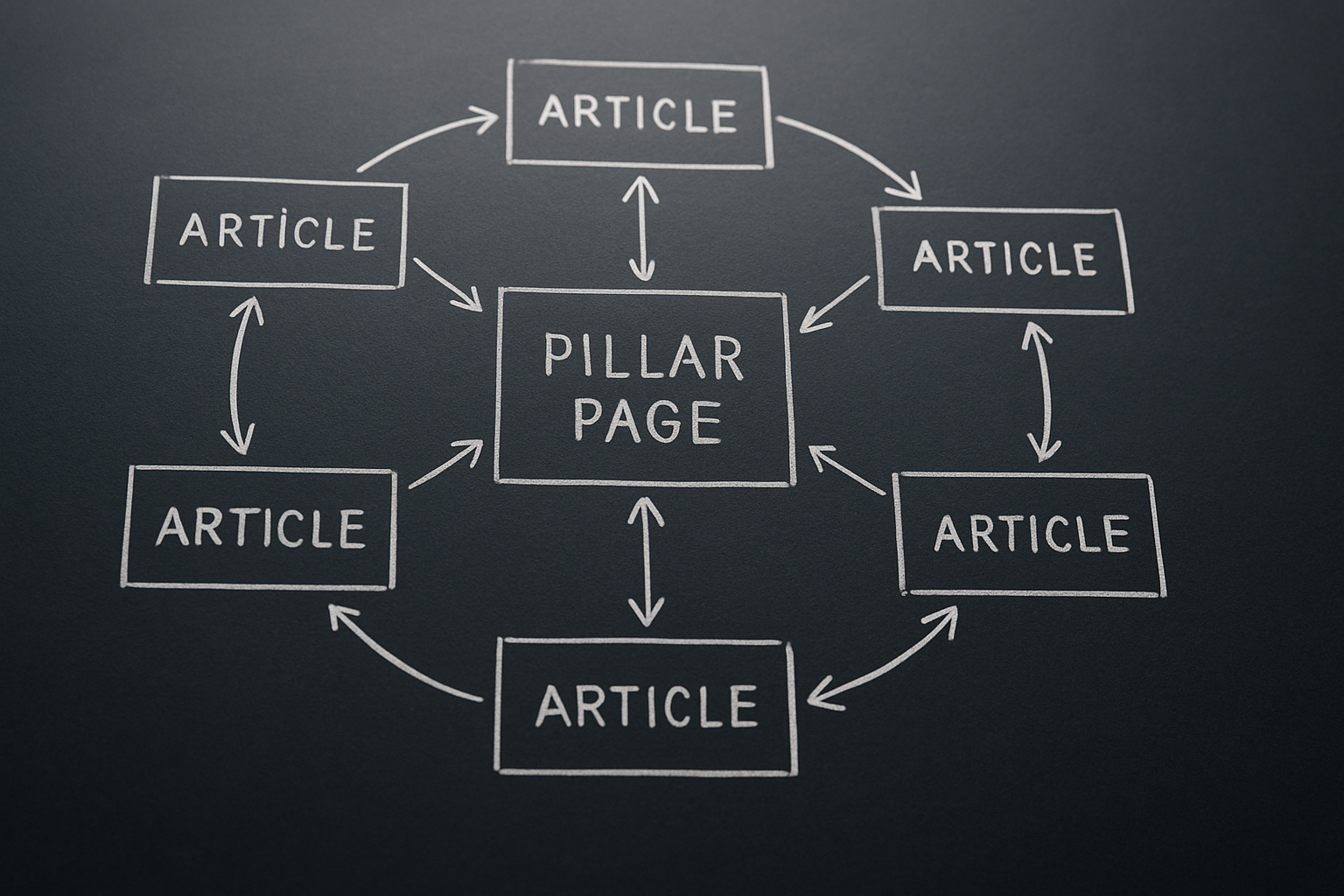
The Cluster Model: Pillar Plus Supporting Articles
The standard structure is a pillar page — a broad overview of the subject — supported by narrower articles that each target a specific sub-question or long-tail keyword, all interlinking back to the pillar and to each other. We've mapped this structure in detail in our piece on building topical authority with a daily content engine.
Why Cadence Beats Intensity: 30 Connected Posts vs. 3 Big Ones
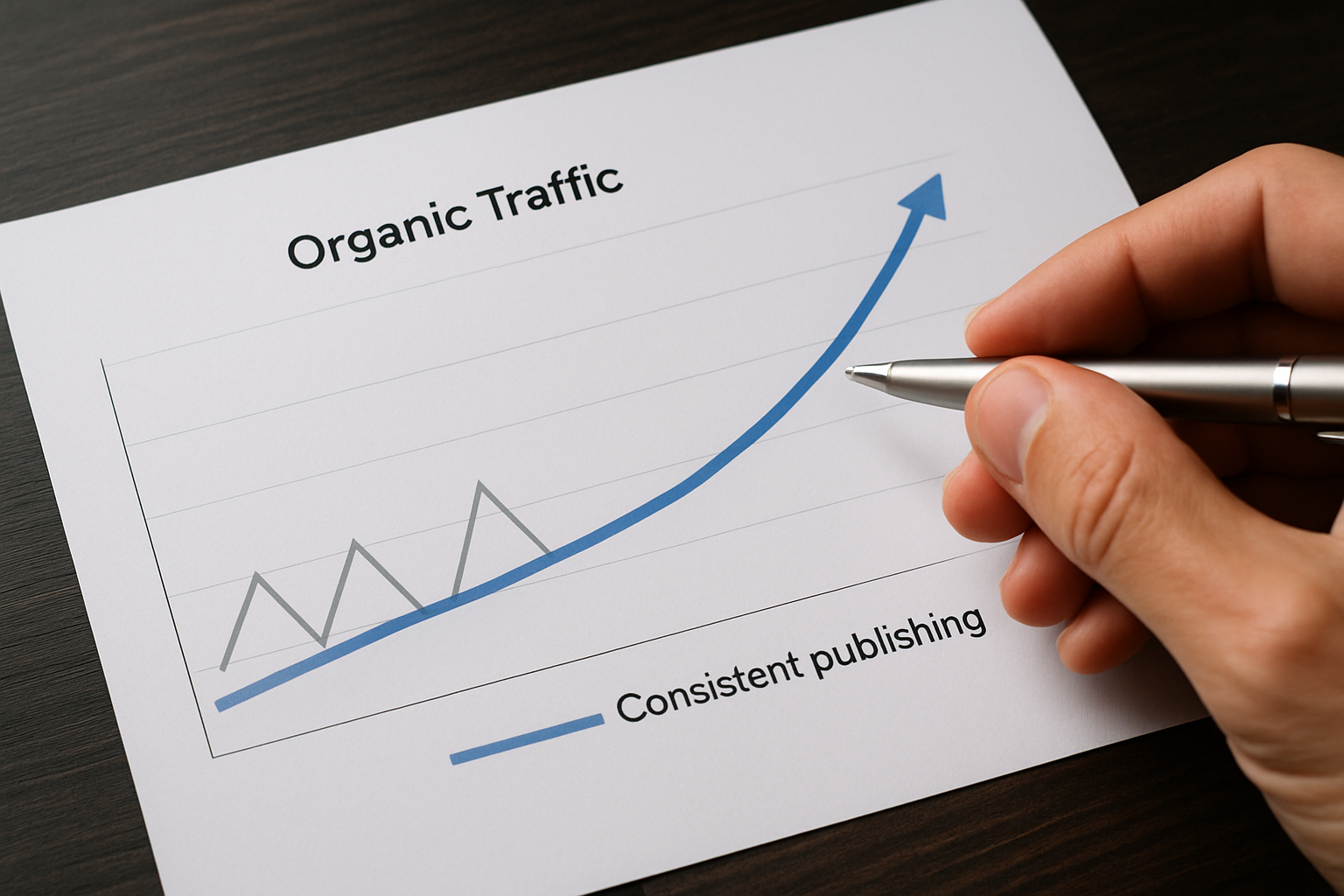
HubSpot's long-running blogging research has consistently found that companies publishing on a regular, sustained schedule generate meaningfully more organic traffic over time than companies that publish in occasional bursts and then go quiet. Cadence, not word count, is the variable that compounds. Three exhaustive 5,000-word guides published in a single month, then silence for a quarter, can't match the coverage — or the crawl signals — of a steady stream of smaller, interlinked posts published daily.
How Keyword Research Maps the Full Topic Before You Write
Building a cluster starts with mapping every sub-topic and question real searchers ask, not guessing at article ideas one at a time. That research — the same process we outline in our 30-day content calendar built from keyword planning data — turns a vague subject into a concrete list of 20 to 50 articles, each assigned to a specific keyword and interlinked by design before the first draft is written.
Internal Linking and a Publishing Workflow That Compounds
Each new article should link to at least two others in the cluster and up to the pillar. Over weeks, this creates a dense internal link structure that search engines use to understand topic relationships — and that readers use to go deeper on your site instead of bouncing back to the results page. This is the workflow we build into our SEO strategy around a compounding content engine: research the full map, publish daily, interlink automatically, and let the cluster mature.
If this sounds like more publishing discipline than your team has bandwidth for, that's precisely the gap a done-for-you daily content engine closes — research, drafting, and publishing on a cadence, with every piece mapped back to the cluster before it's written.
Frequently asked questions
What is topical authority in SEO?
Topical authority is how thoroughly and reliably a website covers a given subject in the eyes of search engines, built through sustained publishing and breadth of related content rather than a single optimized page.
How long does it take to build topical authority?
There's no fixed timeline, but most clusters need several weeks to months of consistent publishing before search engines show meaningful ranking gains across the topic, since authority accrues from sustained coverage rather than a single publish date.
How many articles does a topic cluster need to build topical authority?
Most effective clusters run from roughly 15 to 50 supporting articles around one pillar page, though the exact number depends on how many distinct sub-questions and long-tail keywords the topic actually has.
Does publishing frequency matter more than content length for topical authority?
According to HubSpot's long-running blogging research, companies that publish on a regular, sustained schedule see meaningfully more organic traffic growth over time than those publishing in occasional bursts, suggesting cadence matters more than any single piece's word count.
What's the difference between topical authority and domain authority?
Domain authority is a third-party metric estimating overall site strength across all topics, while topical authority is Google's internal assessment of how completely and reliably your site covers one specific subject.
Is a pillar page required to build topical authority?
A pillar page helps organize and interlink a cluster, but the authority itself comes from the breadth and consistency of the supporting articles underneath it, not from the pillar page alone.